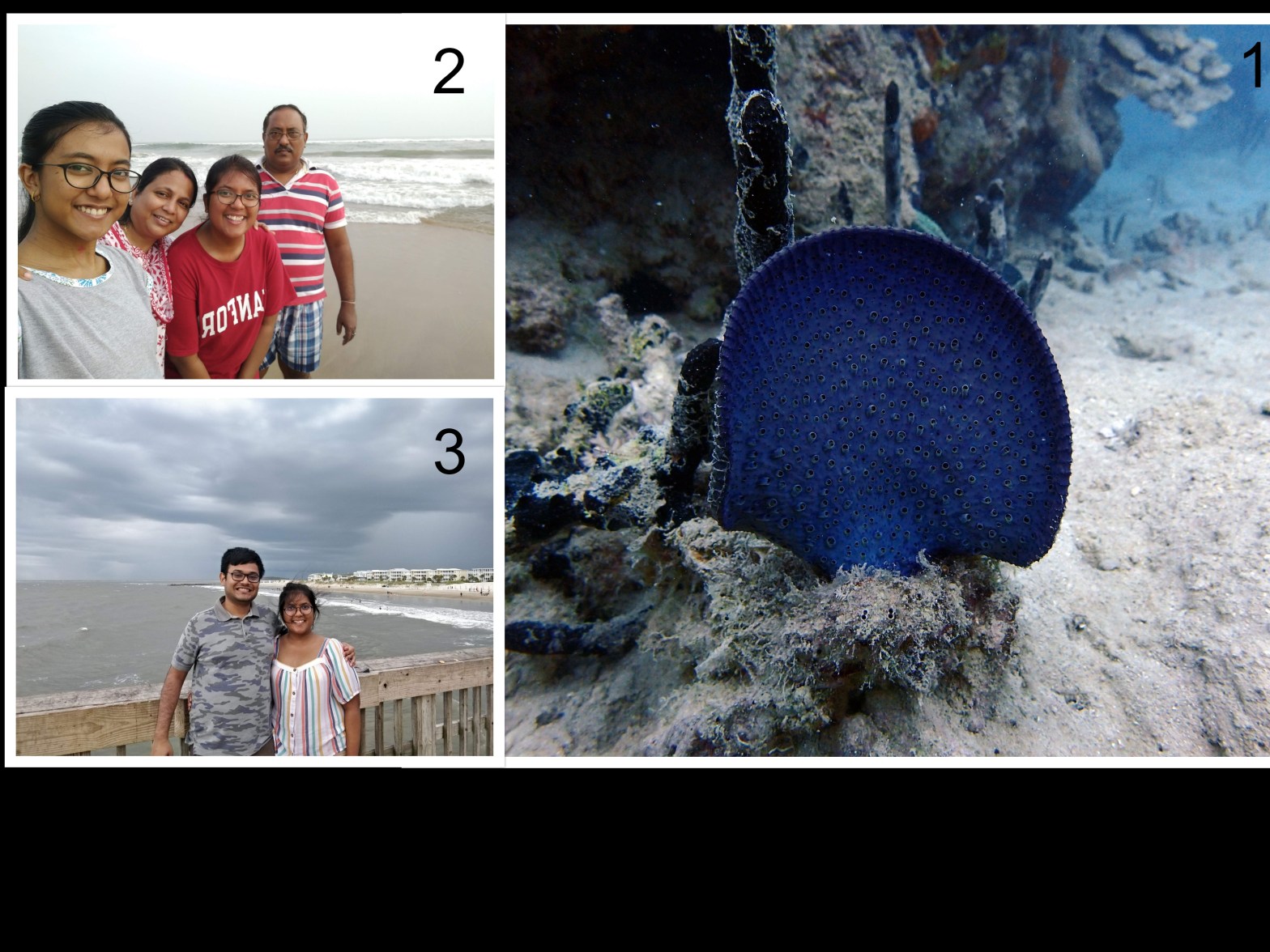
A concoction of nostalgia, excitement to share my research and today being the World Oceans Day, led me to pen down my thoughts on the enchanting life bustling in the depths of the oceans, a minuscule part of which I am fortunate to study in my PhD research. The theme for this year’s World Oceans Day by United Nations is “𝐈𝐧𝐧𝐨𝐯𝐚𝐭𝐢𝐨𝐧 𝐟𝐨𝐫 𝐚 𝐒𝐮𝐬𝐭𝐚𝐢𝐧𝐚𝐛𝐥𝐞 𝐎𝐜𝐞𝐚𝐧” and aligns with my research work to some extent.
#WorldOceansDay
My tryst with the Oceans!
As a kid, my favorite vacations were always the family trips to the many sea-side cities of India. Boasting of a little over 4500 miles of coastline, there was never a dearth of beach cities to choose from for our annual Mohanty family tradition – the much-awaited summer vacations!! There was some magic in those rhythmic sounds of the ocean waves, the smell of salt water and the feeling of warm sand on the sole of my feet, that always soothed me. And my fondest memories are from our trips to Puri (𝗵𝘁𝘁𝗽𝘀://𝗲𝗻.𝘄𝗶𝗸𝗶𝗽𝗲𝗱𝗶𝗮.𝗼𝗿𝗴/𝘄𝗶𝗸𝗶/𝗣𝘂𝗿𝗶), a coastal city in my home state of Odisha – frequented by hundreds of tourists every day to pay their respects to Lord Jagannath (the Lord of the Universe, the English word Juggernaut has its origin from Lord Jagannath) and enjoy the multitude of sea beaches in the city, always bustling with life and energy. On one such trip to Puri, I remember sitting on the beach just as the twilight sun was hovering over the horizon painting the world around me in a sepia filter and my novice 10 year old mind shifted from the orange hue of the sand to the glistening water of the sea and then to the unknown treasures that the depths of the oceans concealed. I tried to divert the confusing thoughts in my mind to my father, who was enjoying the stillness around him and was not very pleased at the sudden perturbation. Opening his eyelids a bit he made sure I was still within his reach and at a safe distance from the sea and then relaxed again and answered my question. I was not very convinced to know that there were fishes inside, I mean what about jewels, mermaids, and other treasures I saw in the cartoons? I would never have anticipated at that time that some 15 odd years later, I would get the opportunity to study a very important treasure housed in the deepest of the oceans – the beautiful animals, marine sponges. My PhD research allowed me to study these animals and appreciate the world inhabiting these oceans. With the advent of deep-sea diving in the 1960s, the marine biologists and ecologists gained access to these treasure troves hidden inside the 70% of water mass on earth. The marine benthic community, including sponges, anemones, corals, algae, nudibranch to just name a few, are reservoirs of chemically endowed and structurally decorated molecules that have been shown to exhibit antibacterial, antiviral, and anticancer activities. The anticancer drug Cytarabine was approved by FDA in 1969 and fast forward to the present day, more than 20 marine derived drugs are in clinical trials. The much in news antiviral drug Remdisivir for treating COVID-19 patients, is a nucleoside analogue – a class of drugs only developed after being found in marine sponges. More than thousands of unique bioactive molecules have been isolated from sea creatures, many of which have led to the development of life-saving therapeutics. Therefore, it has never been of more importance to preserve and protect our marine life. I can in no way say that I have been a crusader in protecting the ocean myself. But through my research I have come to realize the necessity of the marine life and am trying to contribute my one drop in the vast ocean of efforts by other researchers, ecologists, and conservationists. My thesis project involves using contemporary “-Omics” (𝗵𝘁𝘁𝗽𝘀://𝗲𝗻.𝘄𝗶𝗸𝗶𝗽𝗲𝗱𝗶𝗮.𝗼𝗿𝗴/𝘄𝗶𝗸𝗶/𝗢𝗺𝗶𝗰𝘀) based tools to find novel bio-active molecules that marine sponges, and the other creatures like bacteria living in symbiosis with it, produce and how do they synthesize(or make) this potent arsenal of chemical defense. This would aid the laboratories on dry ground above sea level to mimic their production line for large scale access to these molecules. Marine sponges are the most ancient animals in the ocean, with some dating back to thousands of years. It is not possible to grow marine sponges in synthetic environment and they take many years to grow. Because of this, it becomes imperative that we exercise caution while accessing the sponge reserves of the oceans for our research. In my recent paper (and my first paper of academic career) 𝗵𝘁𝘁𝗽𝘀://𝘄𝘄𝘄.𝗺𝗱𝗽𝗶.𝗰𝗼𝗺/𝟭𝟲𝟲𝟬-𝟯𝟯𝟵𝟳/𝟭𝟴/𝟮/𝟭𝟮𝟰, we have shown that using just 5 gram of sponge biomass we could identify the molecules belonging to a specialized bio-active group of compounds (these molecules in general are referred to as natural products 𝗵𝘁𝘁𝗽𝘀://𝘄𝘄𝘄.𝗼𝘅𝗳𝗼𝗿𝗱𝘀𝗰𝗵𝗼𝗹𝗮𝗿𝘀𝗵𝗶𝗽.𝗰𝗼𝗺/𝘃𝗶𝗲𝘄/𝟭𝟬.𝟭𝟬𝟵𝟯/𝗮𝗰𝗽𝗿𝗼𝗳:𝗼𝘀𝗼/𝟵𝟳𝟴𝟬𝟭𝟵𝟵𝟱𝟲𝟲𝟴𝟯𝟵.𝟬𝟬𝟭.𝟬𝟬𝟬𝟭/𝗮𝗰𝗽𝗿𝗼𝗳-𝟵𝟳𝟴𝟬𝟭𝟵𝟵𝟱𝟲𝟲𝟴𝟯𝟵-𝗰𝗵𝗮𝗽𝘁𝗲𝗿-𝟭) and also hypothesize about the probable machinery in action for producing them. This is a huge advancement in the field of marine natural product research where traditionally more than 1 kg of sponge was being used for analysis. I know this is a needle in a haystack kind of a situation, but just realizing the potential of the vast marine life and making small efforts towards preserving them would go a long way! And as for me, on this 28th World Oceans day I hope to continue my tryst with the enchanting world of oceans.
Thanks if you have made it this far  🙂 I appreciate your time and effort and hope you enjoyed reading this as much as I enjoyed writing it! 😊
Picture 1 : A marine sponge of the species 𝐼𝑎𝑛𝑡ℎ𝑒𝑙𝑙𝑎 𝐵𝑎𝑠𝑡𝑎, colloquially called Elephant ear sponge collected during a field trip to Guam by my PhD advisor.
Picture 2: My family during one of our ritual trips to Puri in the year 2018
Picture 3: A trip to cherish with Shubhayan Ghoshal to Tybee island in Georgia, USA in 2019
 Chronicles of the atispi